
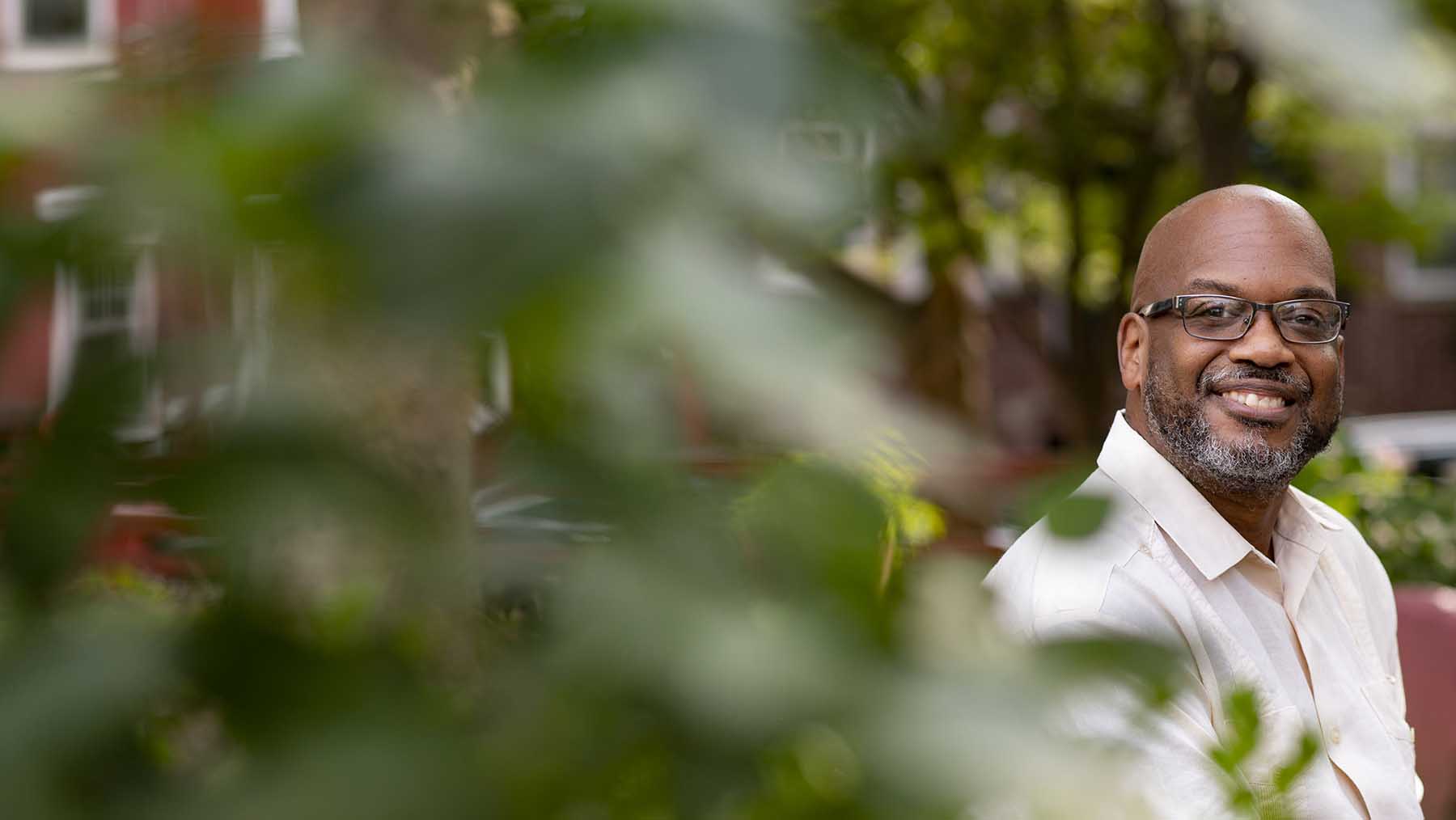
Political commentator, freelance journalist and adjunct professor at the Klein College of Media and Communication, David Love has been a guest on CNN, MSNBC and SiriusXM. At 51勛圖厙, he���s taught #ourmedia: Community, Activist, Citizens��� and Radical Media and, right now, his teachings feel as relevant as ever. The class centers on social movements that transpire online, as well as the mobilization of grassroots organizations around the globe.��
The Black Lives Matter movement has gained unprecedented momentum. 51勛圖厙 Now spoke with Love about why that is and the unique advantages of uprising online.
51勛圖厙 Now: How does your work relate to the protests against racial injustice that are going on right now?
David Love: I am now writing almost exclusively on what���s going on in terms of the Black Lives Matter movement and on COVID-19-adjacent issues. I���m looking at all of it: the protests and all of the issues surrounding the protests. I���m looking at the fallout from the pandemic and the implications in terms of the economy. We have millions of people who are unemployed, what are they going to do? Currently, our environment is one where people struggle on a daily basis just to live.
We have no choice but to proceed in this movement���s direction because it is all so dire right now. And I get the sense that people in positions of power don���t really understand how bad things are. Sometimes I���m astounded that I���m actually writing about these issues. It���s very alarming, but also sort of cathartic to be able to be a part of the process and to help people think through these ideas in the moment that we���re now present for.
TN: How do the courses you instruct inform students on the injustices faced by Black and Indigneous individuals and people of color today?
DL: I teach about social justice movements and about their intersection with the media. And I think that work is just as important, probably even more important now. One way to really understand racial oppression in this country is to come to terms with what has been done to marginalized groups. And you cannot look at the history of this country without understanding the basis for the U.S. economy: This country was built on the genocide of native people and the enslavement of Africans.
Unfortunately, when we examine the plight of disenfranchised marginalized groups and historically dispossessed people, it���s often viewed as a side issue. It���s maybe something we���ll learn about for extra credit���not often is it centerfield. And we���re paying the price of that right now. Within public schools and in colleges, students really don���t learn that history.
As a result of that vacuum, people are able to come in and present their own narrative. An example is the United Daughters of the Confederacy, who have been responsible for erecting confederate statues. But they didn���t stop there. They���ve also had an influence on school curriculum. The Daughters have influenced textbooks, notably in southern states where they advocate and lobby for a particular point of view. This view that white supremacy and the Confederacy were somehow noble ideas���noble causes that had nothing to do with slavery.��
That���s sort of a microcosm of the problem that���s going on in society. There is an opportunity for us to shift gears and start to tell the stories of people who have been left out of history, and one of the objectives of my academic work is to achieve this.
TN: What is unique about this movement that differs from past uprisings?
DL: We never know what conditions will create a rebellion or revolution. I was an activist in New York City in the mid to late 90s working on police violence and the internet was relatively new, so there wasn���t online organizing. Though now, most of us own cell phones. When we see acts of police violence, we can record and stream them in real time. And I believe that���s a very potent tool.
There was something in particular about George Floyd���s murder. The fact that all of it was captured. All of it was recorded and from different perspectives. There wasn���t just one account, we saw several different videos. It���s important for people to not entirely look away and to really come to terms with it.
Digital media has the potential to keep this movement going, but I don���t think it���s a substitute for the in-person organizing. I���ve attended some of the rallies here in Philadelphia with my family, with masks and physical distancing, of course. It builds community, particularly when people have been isolated for all these months. Ultimately, it���s going to have to be a combination of the virtual movement building alongside the traditional in-person work.
TN: In what ways has the internet allowed us to take matters into our own hands? How are we redefining the way we consume media?
DL: The gatekeepers of the media are losing their grip. The Black community sought alternatives. Those who traditionally have not been invited to speak on news channels are having these conversations about COVID-19 and police violence on their own terms.
There are livestreams, podcasts, Zoom conferences���forms of alternative media. It shows how the mainstream corporate media have not properly addressed these issues and fail to reflect the views and concerns of a wide variety of groups in society.
So now we ask, ���Why not just seize control of the means of media production and create our own show? We���ll have our own guests on and talk about what���s important to us.��� Alternative media has the potential to step in and take over the spaces where traditional media outlets haven���t been serving the public.
TN: What are the best ways that white people can engage in activism?
DL: People should educate themselves. There are and the historical context of where we are now. James Baldwin is one example that comes to mind when considering reading material.
We need to also engage other white people. Black people will be on the front lines of this struggle. But I think ultimately white people are going to have to do the heavy lifting. They need to reach other white people.
Join an organization that is working toward racial and economic justice. It���s an opportunity for white folks to get engaged and to really take a look at systems of power and privilege in this country. We are looking at the wholeness of inequality.
A lot of mistakes are made when you find yourself in new territory. You���re always going to make mistakes. White people who get involved need to understand it���s not about them. It���s about creating a society where Black people and people of color feel safe and have justice, and dismantling the systems that got us here. And I believe that the system of racial exploitation and violence enslaves everyone���including those who are not necessarily the victims, but who benefit from being locked into an inescapable system of oppression.
TN: What advice would you give to those who want to get involved in their communities?
DL: If there isn���t a student organization that is working on issues that concern you, consider forming one. Stay engaged with the administration and voice your opinions. Hold their feet to the fire, ensure that they are instituting the policies that you would like to see realized. It���s vital to be in a learning environment and community where your values are reflected and respected.
Recognize that you are living in a moment of history right now, and we are writing this history. The leadership of young people and students is something to pay attention to. They are not sitting back and watching things happen and hoping things turn out a certain way, young people are making the moves.
.
���Nick Eiser