
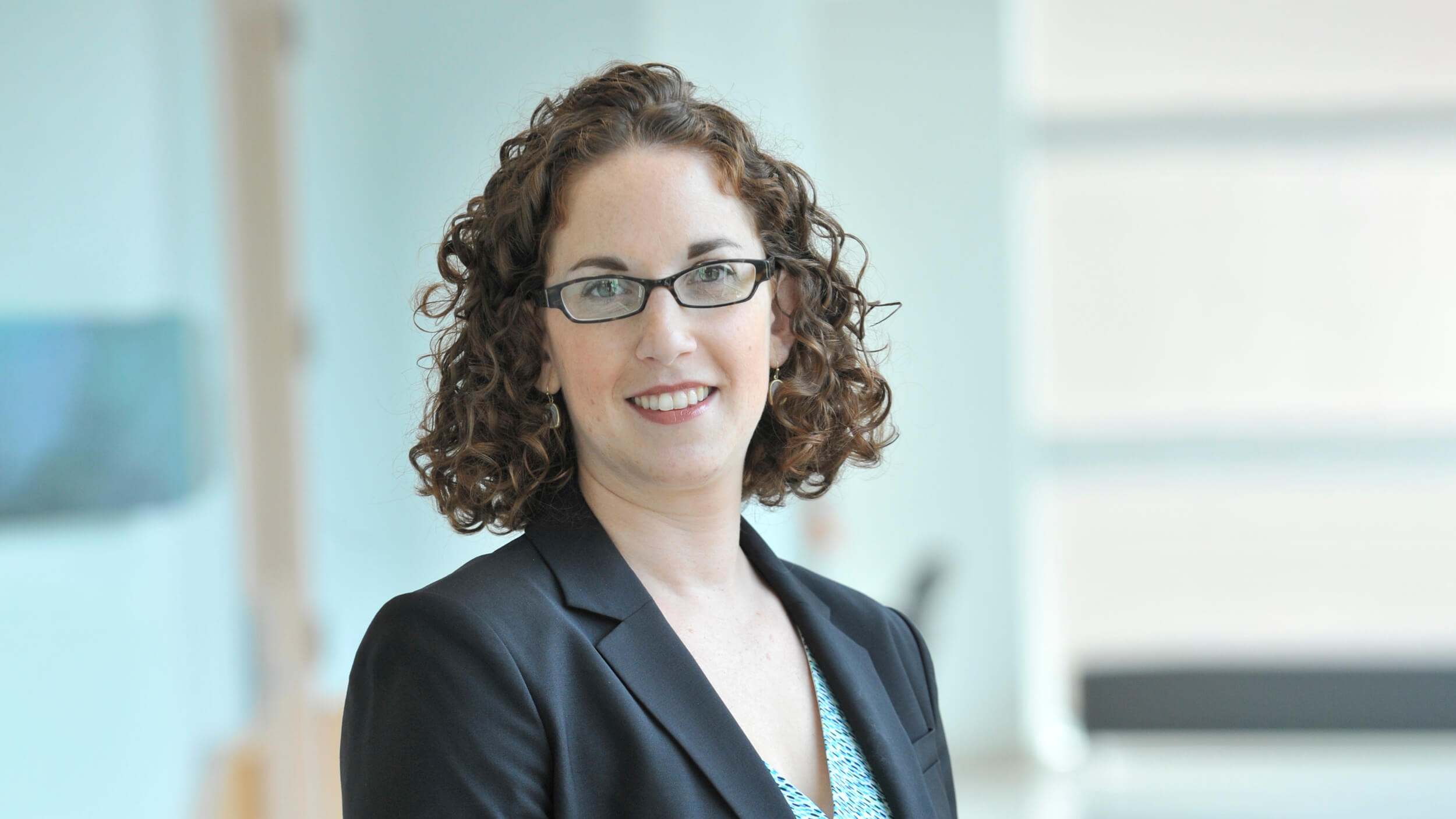
Leora Eisenstadt believes inclusive workspaces matter. An associate professor in the Department of Legal Studies at the Fox School of Business, she is a nationally recognized expert in race and sex discrimination, employment law, sexual harassment, retaliation, and whistleblowing.泭
Eisenstadt studied sex equality and the development of equal employment opportunity law through a Fulbright Fellowship in Israel, and spent several years in the Labor and Employment Group at Dechert LLP litigating cases and counseling clients in employment discrimination issues, general employment matters and Title IX-related litigation.泭
Now, she���s combined her passion for inclusive workplaces with her expertise in educating future business leaders to create the Center for Ethics, Diversity and Workplace Culture (CEDWC).
Housed in Fox and the School of Sport, Tourism and Hospitality Management, CEDWC is a hub for research, dialogue and innovation that brings leaders in industry, government and academia together to focus on building and harnessing diverse workforces and creating ethical and healthy workplace cultures.
We spoke with Eisenstadt about CEDWC, what people can do to create more diverse and accessible workplace cultures and why these environments are important.
[node:pullquote]
51勛圖厙 Now: What inspired you to launch the Center for Ethics, Diversity and Workplace Culture?
Leora Eisenstadt: I came up with the idea back in 2017 around the Me Too movement. My background is in employment law���specifically employment discrimination���and I teach those issues, but it felt to me like there needed to be more of a presence for issues of discrimination, bias, retaliation, harassment and workplace culture at the Fox School.泭
I would see companies across the country ignoring these issues at their own peril. So when the Me Too movement began, what used to be internal problems became external problems that could damage a company���s reputation. Watching events in the movement unfold, I realized that the students we teach at the Fox School are the ones who are going to be the future managers dealing with these issues on a daily basis.泭
I felt there needed to be more of a presence in the Fox School for these issues and a platform for educating our students. I wanted to create opportunities for them to practice having difficult conversations while they���re in school, because they���re going to have them once they���re in the workplace. After a couple of years, I wrote and fine-tuned the proposal for CEDWC and expanded it to include diversity in general, and it just grew from there.
TN: What can executives and future business leaders do through CEDWC? Are there different workshops, training and exercises that members can participate in?泭
LE: Absolutely. We are starting off with an event called to help students and alumni identify how important organizational culture is and how to ask questions about what that culture looks like at the place you���re contemplating going to work for.泭
Then, we���re going to start a Race at Work series with three big events. For the first event in the series, we have invited Jennifer Eberhardt���a Stanford psychologist who wrote the book Biased���to talk about implicit bias and what it can look like in the business world and the classroom, as well as how understanding unconscious biases can help us change our behaviors. We also want to look at systemic racism and how it impacts the corporate world, and to look at inclusion and what chief diversity officers of major corporations are doing to try and create more inclusive spaces in their workplaces.
We are also starting an executive education program that we're rolling out in November with the Center for Executive Education at Fox called DEI: Building Basic Competency. Through this program, we���re offering a three-module series to professionals���people who are not students currently but who want to gain a better understanding of what diversity, equity and inclusion means.泭
TN: Why do you think inclusive environments are important to have in the workplace?泭
LE: First, there���s a business case for diversity and for inclusive workplaces. Studies are pretty clear that having different kinds of people in your workplace together, working effectively and respectfully with each other, actually creates a better product���you���re more innovative, you are more creative, your bottom line improves as a result. So there���s clearly a financial incentive to doing this.泭
But it���s also pretty clear that when employees feel good about the place that they work, they are better employees. When they���re happy, they are more creative, they���re more loyal, they work harder and they are more devoted. Beating your employees down does not produce better work, right? Creating inclusive workplaces where people feel like they can bring their authentic selves to work improves their productivity, overall, because they���re not distracted by having to hide themselves, which can be exhausting and can take away from their ability to do their jobs.
There is also decidedly an ethical component to this work and the reason we called it the Center for Ethics, Diversity and Workplace Culture. We���re not just talking about the business case for diversity, we���re talking about this because it���s the right thing to do.
TN: What do you think is the reason for the lack of these inclusive spaces and cultures in the first place?泭
LE: I think that for a long time it has been a blind spot. People feel comfortable initially with people who are like them, so it���s a natural thing to hire someone who has similar experiences as you, a similar background or who looks like you because you feel comfortable with them. That cycle can repeat over and over again, creating homogeneous workplaces and perpetuating biased systems.Those in positions of power end up creating structures that keep them in power and keep the status quo, making it difficult to identify paths to change and diversify.
Times are obviously changing for the better right now. Between the Me Too movement and the Black Lives Matter movement, we are seeing employees demanding something different and saying the status quo is just not going to cut it anymore. Particularly millennials and Generation Z are saying, ���We want more than a paycheck. We want a workplace culture that embraces differences, we want to like where we work, to care about the work we do and we want to feel valued for who we are and what we bring.��� Employers are having to respond and they can���t have those blind spots anymore���they have to take the blinders off.
TN: What can leaders do to create more diverse and accessible workplace cultures?泭
LE: It has to do with recruiting in a different way. It has to do with understanding what talent means and what you���re looking for in a different way. You���re not just looking to replicate yourself, you���re looking to evolve, think about the pipeline differently and get people into your workplace that are diverse and are different from you.泭
And then, once they���re there, understanding that people bring their personal lives to work. You have to have structures in place to make them feel respected and cared for. Building an accessible culture means understanding bias and how it operates, learning how to best respond to complaints when they do arise, teaching your managers what retaliation is and how not to do it, and starting to understand what is important to people from a social identity perspective: what their pronouns are, what microaggressions are and how your words impact people (even if you don't intend them to impact that way). Basically we have to understand ourselves and other people on a deeper level than we may have before.
TN: How would those who are involved at the center coach executives to handle an employee who isn���t open to that kind of diverse and inclusive culture?泭
LE: Making progress in workplace cultures means that we are always moving forward, so staying in the past is not really an option. I don���t think that we should put people on the defensive or come at people aggressively. I think people need to be brought along in this journey in a way that resonates with them. These are emotional topics. You can���t force this down someone���s throat, you have to slowly understand who that person is and help them to understand the new workplace that they are working in.泭
I see a lot of CEOs doing listening tours and meeting with employees of all kinds in small groups and doing a lot more listening than talking, and that is a fantastic model. It���s impressive for a CEO of a major corporation to sit down with their employees and say, ���Talk to me, tell me what you���re experiencing, tell me what I can do better, tell me how the structures are impacting you���I���m here to listen.��� That���s the beginning and when people feel like they���re being heard, they���re far more willing to come along on that journey.
���Kierstyn Smith泭