
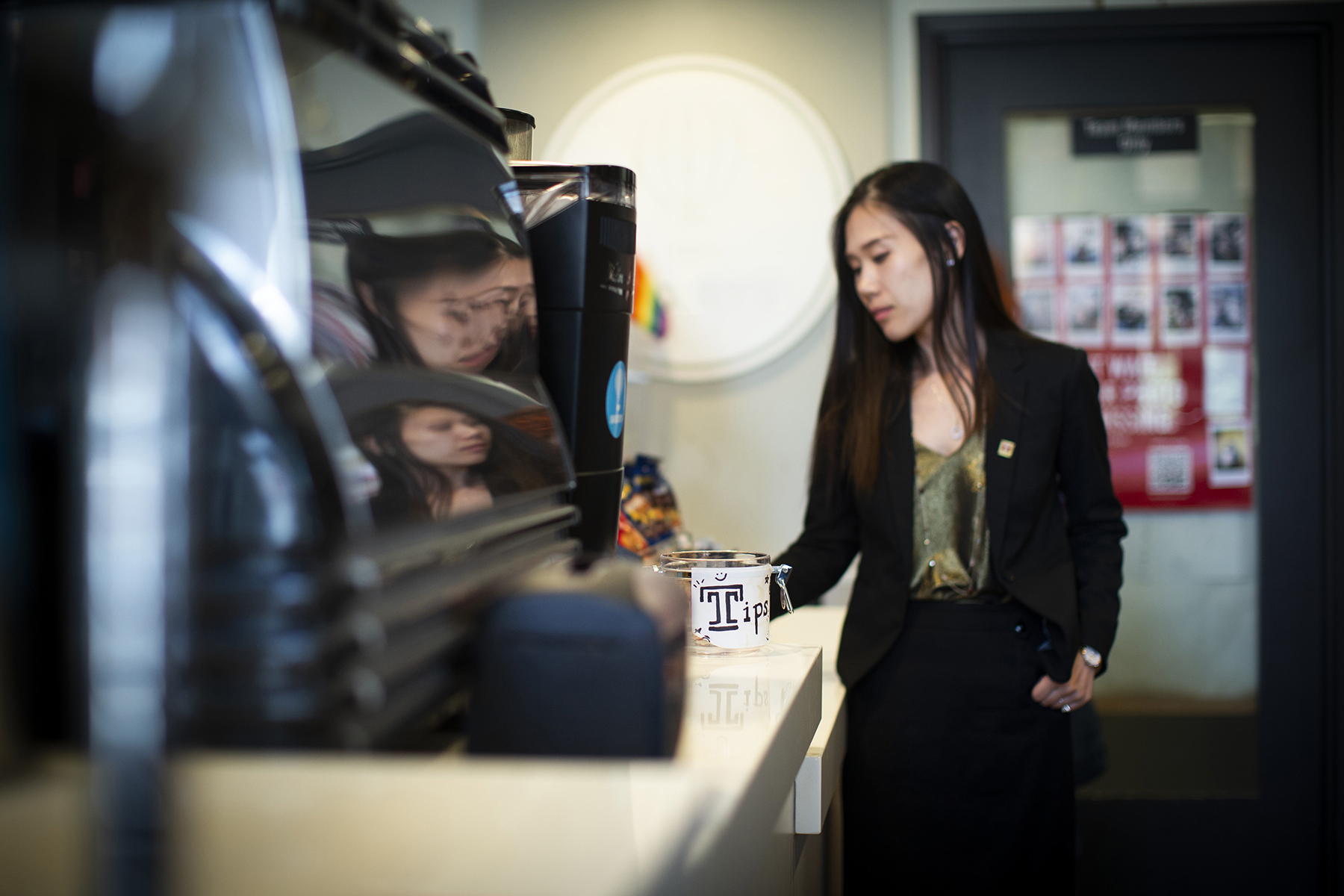
In recent years, tipping has expanded far beyond sit-down restaurants. Customers are now prompted to tip at quick-service counters, fast-food chains and coffee shops���often before receiving any service at all. What was once a way to reward good service has become an expected step in many transactions, sparking frustration, confusion and even guilt.��
Lu Lu, an associate professor at 51勛圖厙���s School of Sport, Tourism and Hospitality Management, is helping to unpack this cultural shift.����
In a new study, Lu found that pre-service tipping often triggers negative emotions���such as discomfort and uncertainty���especially when customers can���t see the service being performed or when the request feels premature.��
���Consumers want to know what they���re tipping for and whether the service will deliver a quality experience,��� she said.����
Published in the International Journal of Hospitality Management and co-authored with Demi Deng of Auburn University and Ruiying Cai of Washington State University, the study, , also revealed that when customers felt unsure about the quality of service or sensed they were being watched, discomfort grew, leading to lower satisfaction and a feeling that tipping wasn���t deserved. But when participants could see employees making drinks, the process felt more open, and tipping prompts felt fairer. ��
The problem, Lu explained, isn���t that people don���t want to tip���it���s that they are being asked to tip in situations where service hasn���t yet occurred or where human interaction is minimal.��
���If this is the direction the hospitality and tourism industry is moving, we need to educate ourselves on how to provide a better service experience for consumers,��� Lu said.��
The study is intended to guide businesses as they consider how to integrate pre-service tipping prompts without alienating customers. The authors encourage businesses to rethink strategies, address tipping fatigue, and develop solutions to prevent potential backlash.��
���We���re not saying don���t ask for tips ��� we���re saying think more intentionally about when and how you ask for tips,��� Lu said. ���There���s a way to do it that feels better for everyone.�����
The study examined three key factors that shape how consumers perceive tipping requests:��
- Whether an employee is physically present during the transaction��
- When the tip prompt appears (before or after service)��
- Whether the customer can observe the employee���s effort��
���We reward people for good service; that���s the nature of tipping,��� Lu said. ���But even without seeing the product or service, why am I tipping here? Customers need to justify their behavior. Asking for an additional expense without showing effort can lack legitimacy.�����
The research team conducted two online experiments with more than 730 participants to understand how tipping prompts affect consumer perception and satisfaction.��
In the first study, participants were shown one of four coffee shop scenarios that varied based on whether a tip was requested and whether an employee was present. They were then asked about their emotional response, whether the scenario felt realistic, how much the employee deserved a tip, and how satisfied they were with their decision.��
���These payment systems are designed to move fast, but they don���t leave space for consumers to process what they���re being asked to do,��� Lu said. ���That���s where the negative feelings can creep in.�����
In the second study, researchers layered in two additional factors: the timing of the tip prompt (before or after service) and the visibility of employee effort���specifically, whether customers could see a barista preparing their drink. Combining these factors with those in the first study created eight different scenarios, allowing the team to better understand how perceptions of legitimacy influence tipping behavior.��
As a researcher and faculty member, Lu focuses on food and beverage marketing and service interactions. She also teaches undergraduate and graduate courses, including food and beverage management, where she plans to bring this research into the classroom.��
���In today���s industry landscape, we���ve seen a wave of changes and innovations, all of which are influencing customer attitudes and behaviors,��� Lu said. She added that these shifts are ���reshaping how we perceive both old and emerging norms��� around service.��
Looking ahead, she plans to study how cultural norms influence tipping behaviors around the world. In Asia, where tipping is far less common than in the U.S., she says the contrast can be striking.��
���An American visiting Asia might feel like they���re in heaven, meals are cheaper and there is little pressure to tip,��� Lu said. ���But someone coming from Asia to the U.S. can feel the opposite. Prices are higher, and tipping 20 to 30 percent can be a shock.�����
Her coming projects will explore those cultural contrasts, along with how AI, automation and robotics are shaping the next phase of customer service.��